
Guida passo dopo passo
Come disossare un pollo
in 10 passaggi

Disossare un pollo intero è semplice con la tecnica giusta e un coltello affilato. In questa guida video passo dopo passo, imparerai come separare un pollo in tagli utilizzabili—dalle cosce e ali ai petti—risparmiando le ossa per un ricco brodo fatto in casa.
Impara le basi della macelleria e migliora le tue abilità culinarie. Un coltello affilato, un tagliere stabile e un po’ di pazienza sono tutto ciò che ti serve.
10 passaggi
Come disossare correttamente un pollo intero
1) Rimuovere le cosce
2) Dislocare l'articolazione dell'anca
3) Tagliare le cosce
4) Rimuovere le ali
5) Dividere il corpo
6) Rimuovere la schiena e il collo
7) Filettare i petti
8) Tagliare le cosce
9) Disossare le cosce
10) Tagliare i filetti e conservare l'osso per il brodo
Scopri il processo completo passo dopo passo
Guida rapida per disossare il pollo
1. Inizia rimuovendo le cosce.
Posiziona il pollo su un tagliere, con il petto rivolto verso l’alto. Tira delicatamente la coscia lontano dal corpo e taglia attraverso la pelle verso l’articolazione che la collega allo scheletro del pollo. Ripeti dall’altro lato.
2. Disloca l’articolazione dell’anca
Gira il pollo a pancia in giù. Individua l’articolazione dal lato posteriore e premi con le dita per far scattare l’articolazione fuori dalla sua sede su entrambi i lati.
3. Taglia le cosce.
Fai un taglio dalla parte posteriore, affettando tra l’articolazione e l’osso verso la coscia. Se incontri l’osso, hai tagliato troppo in profondità.
4. Rimuovi le ali.
Posiziona il pollo con il dorso verso il basso. Solleva un’ala e sostienila da sotto con le dita per esporre l’articolazione. Fai un taglio netto tra l’articolazione e l’osso, evitando di toccare l’osso. Ripeti dall’altro lato.
5. Taglia attraverso la gabbia toracica per separare il corpo.
Affetta le costole alle giunzioni su entrambi i lati del petto. Poi, posiziona il pollo verticalmente con il lato del collo verso il basso e aprilo come un libro.
6. Taglia attraverso il tessuto connettivo rimanente attaccato al petto
e rimuovi l’intera schiena e il collo — che possono essere usati per il brodo.
7. Filetta il petto di pollo.
Fai un taglio verticale lungo la cartilagine dello sterno. Quando raggiungi la fine dell’osso, affetta sotto il lato sinistro e destro del filetto per staccare metà del petto in un unico pezzo. Conserva l’osso rimanente per il brodo.
8. Separa la coscia dal fuso.
Piega la gamba per trovare l’articolazione, poi taglia proprio al centro dell’articolazione per evitare di colpire l’osso. Il taglio dovrebbe essere fluido e senza sforzo.
9. Disossa le cosce.
Gira la coscia con il lato posteriore verso il basso. Taglia seguendo la forma dell’osso da un’estremità all’altra. Una volta che l’osso è esposto, fai un’incisione al centro, facendo attenzione a non tagliare il filetto. Crea un’apertura sotto l’osso con il dito, poi inserisci la punta del coltello nel foro e taglia il filetto su entrambe le estremità dell’osso.
10. Completa la disossatura.
Quando il filetto è quasi separato, usa la mano libera per afferrarlo e fai un taglio finale all’articolazione per rimuoverlo completamente. Conserva l’osso per il brodo.
Il coltello giusto fa tutta la differenza
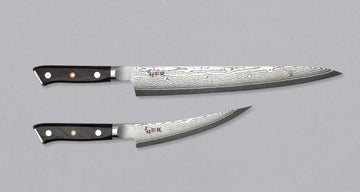
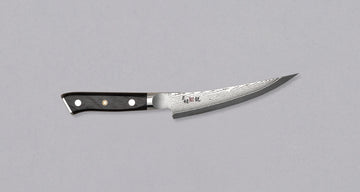
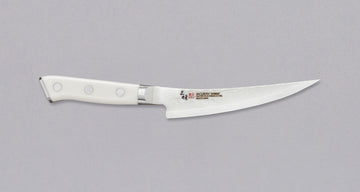


Boning, garasuki, honesuki e deba
Quali coltelli giapponesi sono ideali per la preparazione del pollo?
Per disossare un pollo intero, i coltelli da disosso sono essenziali per tagli puliti e precisi. Tra i coltelli giapponesi, il garasuki si distingue: una lama leggermente più grande e robusta che gestisce facilmente le articolazioni e le parti più spesse del pollame. Il sottile honesuki eccelle intorno alle ossa per lavori delicati. In alcuni casi, anche i compatti coltelli deba possono essere utili, poiché il loro peso e la loro robustezza facilitano il lavoro intorno alle ossa più piccole. Questi coltelli offrono il perfetto equilibrio tra potenza, controllo e affilatura per lavorare il pollame. Dotato di uno di questi coltelli, affronterai il disosso del pollo con abilità e facilità.
Garasuki, honesuki e deba sono tutti coltelli tradizionali giapponesi progettati per lavorare con il pollame, ma ciascuno ha caratteristiche e usi distinti:
HONESUKI è un coltello sottile e affilato realizzato per disossare con precisione e rimuovere la carne dalle ossa. Può avere una lama a singolo o doppio bisello ed è ideale per tagli delicati intorno alle articolazioni, ma non dovrebbe mai essere usato per tagliare le ossa.
GARASUKI è un coltello più grande e pesante con una lama robusta a singolo bisello, perfetto per la scomposizione grossolana di polli o anatre interi, incluso il taglio di piccole ossa e tendini. La sua lama più larga consente tagli più forti e controllati dove è necessaria una forza extra, come nel dividere il pollame in pezzi più grandi.
DEBA è un coltello spesso e pesante, quasi sempre a singolo bisello. Sebbene sia principalmente usato per sfilettare il pesce, funziona bene anche per il pollame—specialmente quando è necessario un taglio preciso ma potente attraverso le ossa. Il suo peso e spessore permettono tagli puliti e controllati senza schiacciare la carne, rendendolo ideale per lavorare intorno alle articolazioni e separare ali o cosce.
Ogni coltello ha il suo ruolo e spesso vengono usati insieme per coprire tutte le fasi della preparazione del pollame—from la scomposizione grossolana al disosso preciso.

Domande frequenti sui coltelli da disossare
Sì, i passaggi base per disossare un pollo sono molto simili per l’anatra e altri volatili. Consistono nel rimuovere le ali, le cosce e il petto, separando la carne dalle ossa. Le differenze possono riguardare la dimensione dell’animale e la durezza delle ossa, quindi per le parti più dure di un’anatra o di uccelli più grandi, potrebbe servire un po’ più di forza o un coltello più robusto, come un garasuki. Tuttavia, le tecniche di disossatura sono in gran parte universali e utili per tutti i tipi di volatili.
Quando si sceglie un coltello per il pollame, è importante considerare le operazioni che si eseguiranno più spesso. Per la scomposizione grossolana e il taglio delle ossa, un garasuki o un deba sono adatti, mentre per la disossatura precisa e il lavoro intorno alle articolazioni, un honesuki è ideale. È meglio avere almeno due coltelli che si completino a vicenda.
Inizia dalle articolazioni, usando la punta del coltello per fare tagli precisi intorno alle ali, alle gambe e alla spina dorsale. Tieni sempre il coltello affilato e segui le ossa con colpi controllati e guidati. Evita di tagliare attraverso le ossa: lavora intorno a esse per proteggere la lama e garantire tagli puliti e sicuri.
Sì, un coltello da disosso è adatto per disossare tutti i tipi di carne—dal pollame e maiale al manzo, agnello e selvaggina. È anche eccellente per sfilettare il pesce, rifilare la carne o rimuovere la pelle.
Il deba è un coltello versatile, utilizzato sia per sfilettare il pesce sia per disossare il pollame. Tuttavia, un deba non è pensato per tagliare ossa grandi, poiché non possiede la lama massiccia e simile a un martello di un tradizionale mannaia da macellaio. Detto ciò, il suo design robusto e pesante lo rende eccellente per tagliare ossa più piccole del pollame, la colonna vertebrale del pollo e le articolazioni minori, oltre a rifilare le parti più dure della carne (come pinne, code o teste nel pesce) e separare la carne dalle ossa nel pollo e in altri volatili. In breve, il deba gestisce con facilità i tagli più impegnativi nel pollame e nel pesce, ma non è lo strumento principale per ossa molto grandi o molto dure.