
Smart Buying Guide
Best Knives for Home Chefs

Choosing the right knives changes how you cook. Prep becomes faster. Cuts become cleaner. Ingredients keep their structure instead of getting crushed. You don’t need a drawer full of blades. You need a focused set that covers daily tasks and feels right in your hand.
This guide breaks down the best knives for home chefs and explains what to look for when building a reliable kitchen setup.
The Core Knives Every Home Cook Should Own
You can prepare nearly any meal with three to five well-chosen tools. The goal is efficiency, not quantity. The best knives are the ones you reach for every day because they simply work.

The All-Purpose Workhorse
Chef’s Knife
If you own only one blade, make it a chef’s knife. It handles most kitchen prep, from slicing onions to chopping herbs and cutting meat.
Typical size ranges from 20–23 cm (8–9 inches). This length offers enough surface for large vegetables while remaining agile for smaller tasks.
Why it matters:
- Slices, dices, and chops with control
- Works equally well on vegetables, herbs, and proteins
- Replaces multiple specialty knives
When choosing one, focus on balance and comfort. The weight should feel centered, not blade-heavy or handle-heavy. A full tang construction, where the blade runs through the handle, increases durability and stability.
Among the best knives for everyday cooking, the chef’s knife stands at the top because it defines how efficiently you work.
![Hatsukokoro Mercury Kiri-Gyuto Kurozome Damascus 210mm (8.3") [Mono Olivewood]](http://sharpedgeshop.com/cdn/shop/files/Mercury_Kiri-Gyuto_Kurozome_Damascus_210_mm_Mono_Olivewood__420103121959_1_360x.jpg?v=1774947196)


Precision in a Small Format
Paring Knife
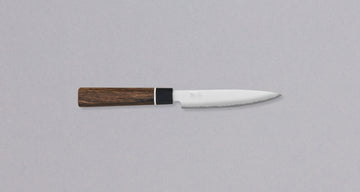
A paring knife handles the small, detailed jobs that a chef’s knife cannot. Typical blade size is 7–10 cm (3–4 inches). The short blade gives you control for close work.
You use it for:
- Peeling fruit and vegetables
- Trimming small cuts of meat
- Deveining shrimp
- Removing blemishes or seeds
It may be small, but it solves precise problems. A well-made paring knife completes your core setup and pairs naturally with a chef’s knife.



Clean Cuts Without Crushing
Bread Knife
A serrated bread knife is often underestimated. It’s not only for bread.
The serrated edge grips and cuts through crust without compressing the soft interior. That same structure works beautifully on tomatoes and citrus.
You need it for:
- Crusty loaves
- Soft sandwich bread
- Tomatoes
- Citrus fruits
Even if you bake occasionally, this tool prevents uneven slices and torn textures. In many kitchens, it quickly becomes one of the best knives for handling delicate, soft ingredients.


For Serious Protein Prep
Boning or Fillet Knife
If you frequently prepare poultry, fish, or larger cuts of meat, a boning or fillet knife adds precision.
It features a thin, often flexible blade designed to separate meat from bone cleanly. The flexibility helps follow the natural contours of fish and poultry.
Ideal for:
- Filleting fish
- Deboning chicken
- Trimming larger protein cuts
When protein preparation is part of your routine, this tool increases speed and reduces waste. For that purpose, it belongs among the best knives in a home chef’s extended collection.


How to Choose the Right Knife for You
Owning the best knives is not about brand hype. It’s about construction, comfort, and long-term performance.
1. Blade Material
High-carbon stainless steel offers a strong balance between edge retention and manageable care. It holds sharpness well while resisting corrosion.
Avoid low-quality stamped steel that dulls quickly. Frequent dulling leads to more sharpening and inconsistent results.
2. Handle Comfort
You should feel secure without gripping tightly. A good handle supports control without causing fatigue. If possible, hold the knife before buying. The right fit reduces strain during longer prep sessions.
3. Balance and Weight
A knife that is too heavy causes fatigue. One that is too light can reduce control. Ideally, balance sits near the middle where blade meets handle. That neutral balance improves precision and efficiency.
4. Maintenance
Even the best knives require care. Use a steel or ceramic hone regularly to maintain the edge. Sharpen with a whetstone or guided sharpener when performance drops. Store blades safely in a block, on a magnetic strip, or in protective sheaths to protect the edge.
Proper maintenance ensures consistent cutting performance and extends the life of your tools.
Why Knife Quality Impacts Taste and Results
A sharp blade makes clean cuts. Clean cuts reduce cellular damage in vegetables and herbs. That preserves texture and appearance. In proteins, a sharp knife slices rather than tears, keeping structure intact.
This is why serious cooks invest in the best knives instead of relying on dull, generic sets. Efficiency improves. Waste decreases. Presentation becomes cleaner.


![Hatsukokoro Mercury Petty Kurozome Damascus 150mm (5.9") [Mono Olivewood]](http://sharpedgeshop.com/cdn/shop/files/Mercury_Petty_Kurozome_Damascus_150_mm_Mono_Olivewood_--_420107071956-4_720x.jpg?v=1774947213)
![Hatsukokoro Mercury Petty Kurozome Damascus 150mm (5.9") [Mono Olivewood]](http://sharpedgeshop.com/cdn/shop/files/Mercury_Petty_Kurozome_Damascus_150_mm_Mono_Olivewood_--_420107071956-4_540x.jpg?v=1774947213)


What SharpEdge Offers to Home Chefs
SharpEdge is a destination for high-performance kitchen blades. The selection focuses on tools that meet the expectations of both dedicated food enthusiasts and serious chefs.
Beyond products, SharpEdge emphasizes education. Understanding how a sharp kitchen knife affects preparation quality is central to better cooking. The sharper and more precise your blade, the more control you have over texture, appearance, and consistency.
The mission extends further. The goal is to help every person working in a kitchen reach their own personal Jinba Itai – the harmony between cook and tool. When the knife feels like a natural extension of your hand, preparation becomes fluid and confident.
That is the foundation of choosing the best knives for your home kitchen. Not quantity. Not trends. Precision, comfort, and performance that support how you cook every day.


