Higonokami: A minimalist Japanese pocket knife with a story to tell

Among the many folding knives that have come and gone over the last century, few have remained as quietly influential as the Higonokami. There are no modern locking mechanisms, no pocket clips, no tactical styling — yet its appeal has never fully faded.
Owning a Higonokami isn’t just about having a sharp tool in your pocket. It’s about holding a piece of Japanese craft culture that managed to survive dramatic social changes and still find relevance today.

A pocket knife unlike Western folders
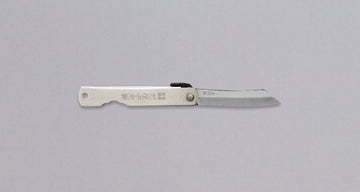
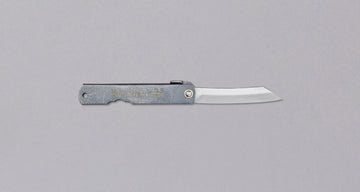
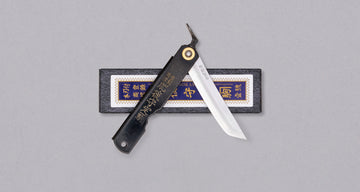
At a glance, the Higonokami looks almost too simple: a slim metal handle, a friction-folding blade, and a small tab on the back called a chikiri used to swing the blade open. There’s no spring or lock to secure it — instead, it stays in position through friction and the user’s thumb on the chikiri during use.
This concept is surprisingly effective. The knife stays light, durable, and easy to maintain. Many are made from high-carbon steels that take on a beautiful patina and achieve exceptional sharpness with minimal effort.



From samurai traditions to everyday tools
Although the Higonokami is modest in size, its roots stretch back to a very different Japan. Before the 20th century, the country’s blacksmiths primarily produced swords and weapons exclusively for the warrior class. But when Japan modernized during the Meiji era, swords were outlawed, and the role of the samurai disappeared almost overnight.
Faced with new laws and changing markets, former swordmakers redirected their skills toward tools that were still legal and useful — small folding knives among them. Around 1896, craftsmen in Miki City (an area long famous for metalworking) developed what would become the Higonokami. It was inexpensive, easy to manufacture, and practical for ordinary people: students could sharpen pencils, tradesmen could cut cordage, and farmers could use it for daily tasks.
As production grew, the knife spread throughout Japan and eventually abroad, becoming a familiar everyday object for decades.


Cultural significance and trademark details
As demand grew, a guild formed to protect the integrity of the knife and standardize production. For that reason, many traditional Higonokami knives bear stamped characters on their handles — markings that reference the name, trademark status, and the workshop that forged them.
Those kanji pressed into the brass or steel aren’t decorative; they’re historical markers. The most prominent workshop with direct lineage to the origins of the Higonokami is Nagao Kanekoma, today led by fifth-generation blacksmith Mr. Mitsuo Nagao.
Why the Higonokami endures
The Higonokami may seem outdated next to modern folders with complex mechanisms and advanced steels, yet it continues to attract collectors, hobbyists, and EDC enthusiasts for several reasons:
- Authenticity: It reflects a real chapter of Japanese history.
- Minimalism: Nothing is there without purpose.
- Carryability: It disappears in a pocket and weighs almost nothing.
- Craftsmanship: Many are still assembled by hand in small workshops.
This combination puts the Higonokami somewhere between an artifact and a working tool — a balance very few knives achieve.


Choosing a Higonokami today
Modern buyers have far more options than existed a century ago, so it’s worth considering a few factors when choosing your knife:
→ Blade length: Smaller blades excel at everyday utility tasks, while longer blades are better suited for outdoor use or light kitchen duty.
→ Steel: Traditional carbon steels sharpen easily and develop a beautiful patina over time, but they do require more care. Stainless steels, on the other hand, offer better corrosion resistance and tolerate a bit of neglect.
→ Handle material: Brass is the classic choice and will age with a unique patina, while other materials change the overall weight, balance, and feel.
→ Aesthetics: Most Higonokami knives stick to the original minimalist silhouette, but newer interpretations experiment with alternate profiles and finishes. Choose the style that resonates most with you.
Using and maintaining your knife
High carbon steel and friction-folding mechanisms don’t demand much, but a little care goes a long way. To keep your Higonokami performing well:
- Wipe the blade dry after cutting
- Apply a light coat of oil to carbon steel blades to prevent rust
- Store it in a dry environment
- Sharpen with a whetstone for the best edge
With occasional care, a Higonokami can last for decades — and often becomes more attractive and characterful as it ages.
Insider tip: If the blade opens a little too freely, a gentle tap on the pivot with a hammer will tighten it up.

A quiet reminder of craftsmanship
What makes the Higonokami special is not just its function, but its place in a world that increasingly favors disposable and overbuilt gear. It represents a quieter philosophy — one that values:
- Simplicity over complexity
- Skill over mechanism
- Craft over mass production
For anyone who appreciates tools with history, the Higonokami offers something rare: a genuine connection to Japan’s blade-making heritage that still works just as well today as it did over a century ago.